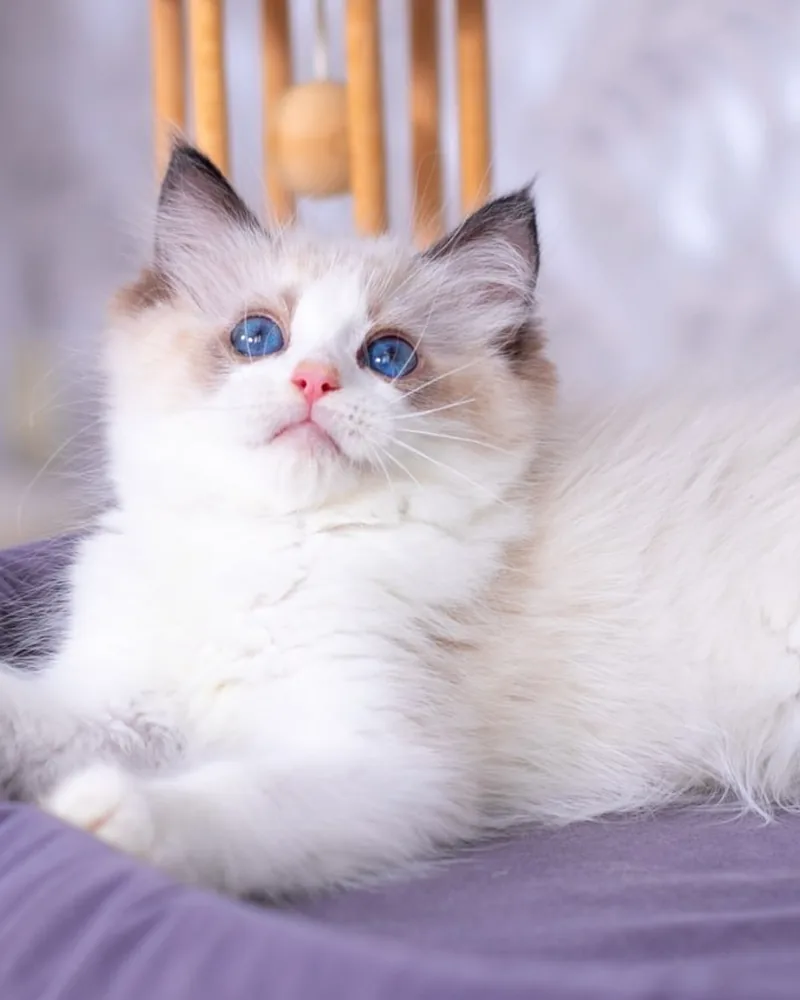
Juniper
Available- Sex
- Female
- Age
- 14 weeks
- Colour
- Seal bicolour
- Price
- $1,500
Long, plush and happiest stretched out on the cat bed.
Ragdoll patterns
A bicolour Ragdoll is the pattern with the most white: a white inverted V down the face, a white chest and belly, four white legs and a pink nose, with colour on the ears, outer mask and tail. It comes in seal, blue, chocolate and lilac, always with blue eyes. Most of this season's kittens at Regal Ragdoll Kittens in Bowral, NSW are bicolours, because our king Atticus is one.
Every bicolour kitten we have right now, in every colour. Each one is $1,500 and goes home at twelve to thirteen weeks, desexed, microchipped and vaccinated.
Long, plush and happiest stretched out on the cat bed.

A round, soft boy who purrs as soon as you look at him.
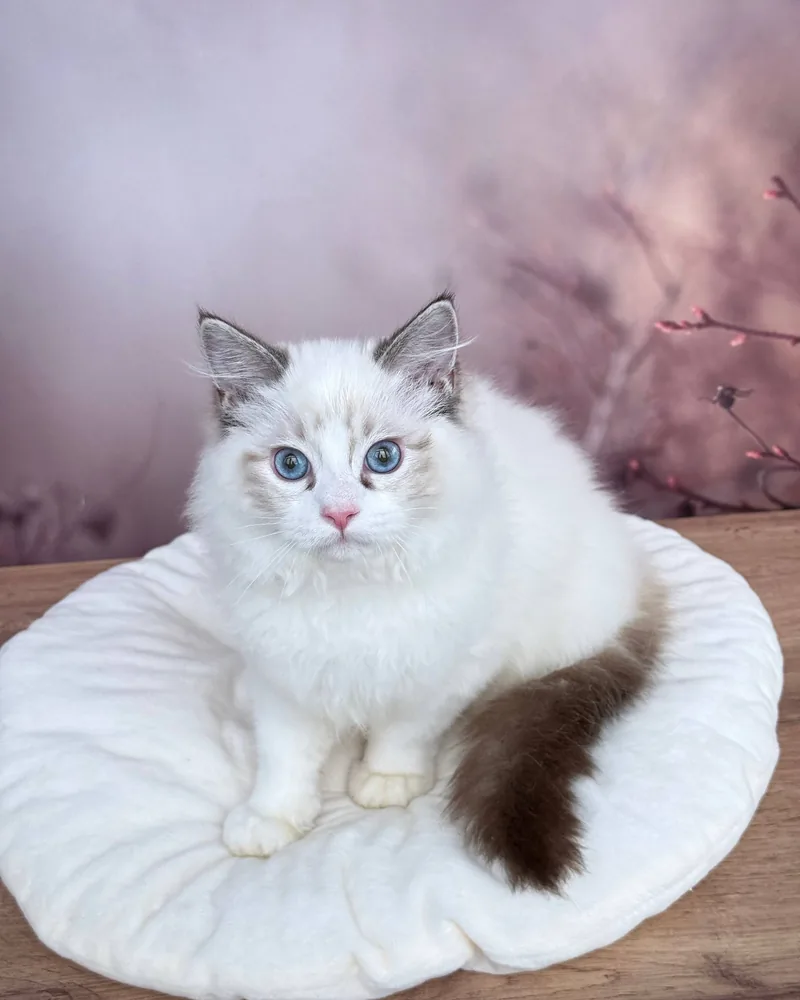
Playful, bold and fascinated by running water.
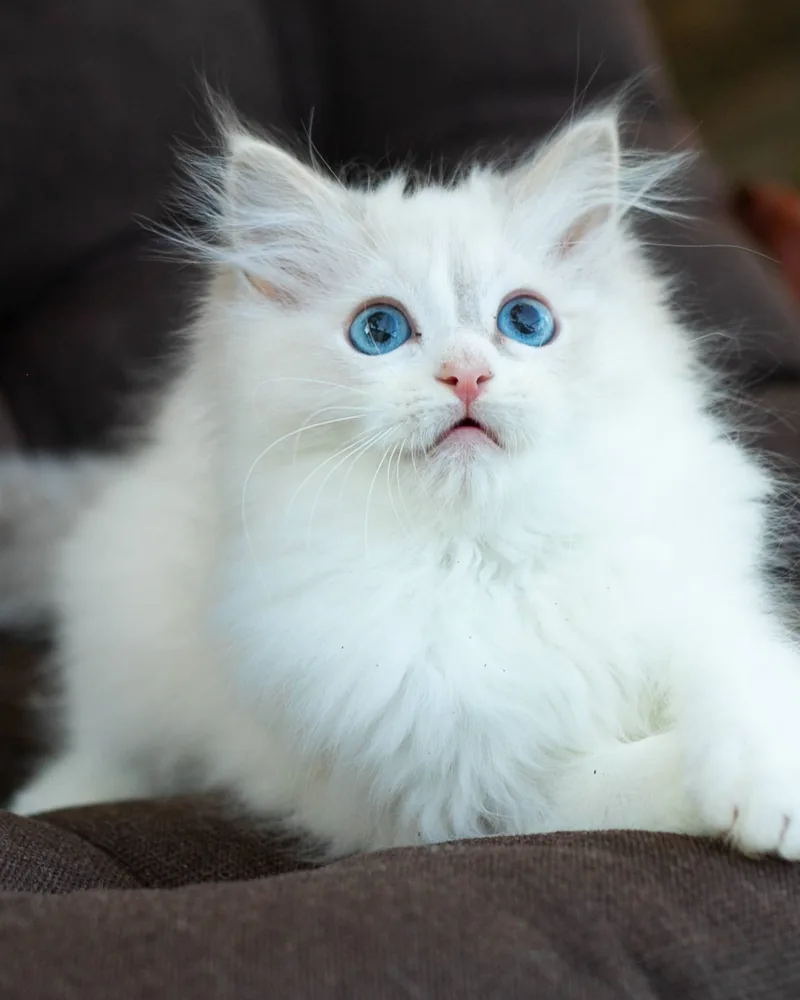
Extra fluffy and happy to be carried around the house.

Long-legged, chatty and the first to the door.
Read a bicolour from the face down. The mask is split by a white inverted V that starts between the eyes and opens out over the muzzle and chin. In a well-marked cat the V is roughly even on both sides and stays inside the outer edge of the eyes, but for a pet the exact shape makes no difference at all.
Below the face, the chest, belly and all four legs are white, including the feet. The back carries a soft wash of the point colour, which deepens as the cat ages, and some bicolours have a few white splashes on the back as well. The ears and tail are fully coloured. Because the nose and paws sit in the white, the nose leather and paw pads are pink.
Bicolour kittens are born white like all Ragdolls, and they can look almost entirely white for the first months. The points arrive slowly against so much white, which is why a young blue or lilac bicolour is often mistaken for a white Ragdoll.
The highest-contrast bicolour: near-black seal ears and tail against bright white. Adults in cool climates can look black and white in photos. Atticus, our king, is a seal bicolour, and so are several of this season's kittens. More on the colour is on our seal point Ragdoll page.
Slate grey ears, mask and tail with white, and a cooler, softer look than a seal. Blue bicolour kittens stay pale for a long time. Our blue point Ragdoll page explains how blue differs from lilac.
The palest bicolour of all, with pinkish-grey points that barely show in young kittens. Poppy, our queen, is a lilac bicolour. See our lilac point Ragdoll page.
Warm milk-chocolate points with white. It is uncommon in Australia because both parents must carry chocolate. Our chocolate point Ragdoll page has the detail.
The two white patterns are easy to mix up in kitten photos. This is the quickest way to tell them apart.
| Bicolour Ragdoll | Mitted Ragdoll | |
|---|---|---|
| Face | White inverted V over the muzzle | Full mask, white chin, sometimes a thin blaze |
| Nose leather | Pink | Matches the point colour |
| Front legs | Fully white | White mittens on the paws only |
| Back legs | Fully white | White boots up to the hock |
| Chest and belly | White | White stripe from chin to belly |
Some bicolours carry more white than usual, with colour only on the ears, the top of the mask and the tail. Some breeders and registries call this a high-white or van pattern. It is a variation of the bicolour, not a different breed, and it makes no difference to a pet's health or temperament.
Pattern is about where the white goes, not personality. That said, for a first Ragdoll I often point families toward a bicolour boy: they grow into big, easygoing cats, and the open white face makes their expressions easy to read. Temperament, size and grooming are covered in our Ragdoll cat breed guide, and every pattern and colour is compared in our Ragdoll colours guide.
A bicolour Ragdoll is a pointed Ragdoll with a lot of white: a white inverted V on the face, a white chest and belly, and four white legs. The ears, the outer mask and the tail carry the colour, which can be seal, blue, chocolate or lilac. Like every Ragdoll, a bicolour has blue eyes.
Yes. On a bicolour the nose sits inside the white inverted V, so the nose leather is pink rather than the colour of the points. The paw pads are pink too, because the legs and feet are white. That pink nose is one of the quickest ways to tell a bicolour from a colourpoint or a mitted.
Yes. Bicolour, bi colour, bi-colour and bicolor all describe the same Ragdoll pattern. Australian and British breeders usually write bicolour, and American breeders write bicolor. The cat is the same: pointed, blue-eyed and white on the face, chest, belly and legs.
From Regal Ragdoll Kittens a bicolour costs $1,500, the same as every other pattern and colour. The price includes desexing, microchipping, two F3 vaccinations, a vet check and ACF pedigree papers. Some breeders charge extra for very symmetrical show markings; we price every pet kitten the same.
Tell me which colour you are hoping for and a little about your home, and I will let you know which bicolour kittens might suit.